
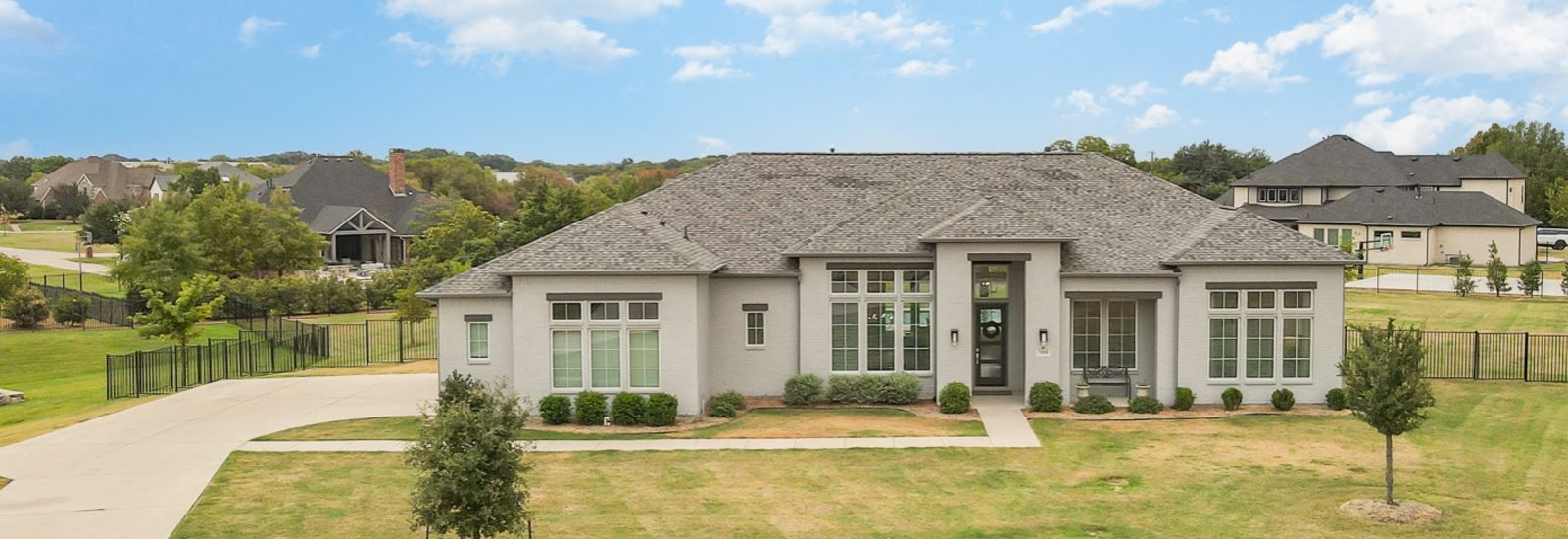
What to know before you start — from pre-approval to closing day
Buying a home in Northeast Dallas or Rockwall County involves a specific set of steps, contracts, and decisions that are particular to this market and to Texas. This guide covers the full process — clearly and without the fluff — so you know what to expect at every stage.

Pre-approval tells you what a lender will loan — not what you can comfortably afford. Those are different numbers.

In Texas, the option period is your primary protection window. Understand it before you make an offer.

Resale strength belongs in every purchase evaluation — not just whether you love the house today.
Most buyers know the basic steps — get pre-approved, find a house, make an offer, close. Here’s what actually happens inside each of those steps in this market.

Clarify timeline, budget, school district needs, and commute priorities before you see a single listing. These answers shape every search decision that follows.

Pre-approval is non-negotiable before touring seriously. It tells you — and the market — that you're a qualified buyer. See Section 2 for what it does and doesn't tell you.

Identify the Right Communities Rockwall, Rowlett, Heath, Sachse, Fate, Royse City, Plano, Richardson, Wylie — each community has distinct pricing, school districts, and character. Focusing early on the right area saves significant time and reduces dead ends.

Touring builds market context. Buyers who understand what's selling — at what price, how quickly — are better positioned when the right home appears. Don't tour randomly.

Texas purchase contracts include terms that carry real weight — option period, earnest money, financing contingency, and more. An offer isn't just a price; it's a set of terms that creates or gives away leverage.

Your unrestricted exit window. Use it for inspections, specialist evaluations, and final financing confidence. This is a Buyer's primary protection in Texas — don't rush through it.

Closings in this market typically take 30–45 days from contract execution. Your lender finalizes approval, the title company handles settlement, and a final walk-through confirms the property's condition before you sign. Knowing what to expect at each stage eliminates last-minute surprises.
Pre-approval is the starting point — not the finish line. Here’s what it tells you, what it doesn’t, and what to watch for between approval and closing.
The Most Common Mistake Home Buyers Make
A lender approves based on debt-to-income ratios — not your lifestyle, savings goals, or how the payment will feel six months in. Before settling on a target price, calculate your realistic all-in monthly cost: principal, interest, property taxes, insurance, and HOA if applicable. In Rockwall County, taxes alone are meaningful enough to shift your comfortable price range significantly.
Choose Your Lender Wisely
Sellers pay attention to who the lender is. A local or regional lender who can speak directly to a listing agent often carries more weight than a marginally lower rate from a slow-to-respond online lender. Ask about turnaround time on pre-approvals, experience with Texas contracts, and how they communicate during a live transaction.
Between Approval and Closing
Avoid opening new credit accounts, making large purchases, changing jobs, or moving significant sums between accounts without talking to your lender first. Any of those actions can affect your loan status — sometimes at the worst possible moment in the transaction.
"Approval is not affordability. Knowing your comfortable with monthly payment is more important than knowing your maximum loan amount."
The North Texas market covers a lot of ground. Understanding the communities before you narrow your search saves time and reduces the risk of focusing in the wrong direction.
Helpful Links:
In Texas, an offer is more than a price. The One to Four Family Residential Contract governs most purchases here, and the terms within it carry real financial weight.

A good-faith deposit held by the title company and applied at closing. Too low an amount can undermine an otherwise strong offer. Typically 1% of the purchase price in this market — higher in competitive situations.

A separate, non-refundable, "nominal" amount paid directly to the seller in exchange for your option period. It buys you the right to walk away for any reason during that window — forfeiting only this fee, not your earnest money. 1% of the Earnest Money amount is a good rule of thumb.

Price matters, but sellers also weigh financing type, option period length, closing date flexibility, and lender strength. Understanding a seller's priorities — not just market value — can shape an offer that competes more effectively.

If a home goes under contract above appraised value, the lender will only fund up to the approved LTV (loan to value ratio) of the appraised value. Buyers need to be prepared to either cover the gap in cash, renegotiate the price, or terminate the contract if the numbers no longer work.
The option period is one of the most important — and most misunderstood — protections in a Texas real estate transaction. It’s a negotiated window, typically 5 to 10 days, during which you can terminate the contract for any reason with no questions asked. You pay a small, non-refundable, “nominal” fee directly to the title company in exchange for this right. The Title Company holds the option fee in escrow for the seller. If you terminate during your option period, the seller is sent the option fee and your earnest money is refunded. You may elect, in the contract, to have the option fee apply towards your closing costs at closing. Unlike earnest money, the option fee is not a sign of good faith, but rather it’s the cost of keeping your options open while you complete your due diligence.
NOTE: Both the option fee and the earnest money are due at the title company within 3 days following the contract execution. All funds received by the title company, from the Buyer, are applied first to the earnest money and then to the option fee. If your option fee is not paid by the end of business on the 3rd business day, you lose your unrestricted right to terminate the contract during the option period.
Once you’re under contract, the option period clock starts immediately. This is your primary exit window, and most of the critical due diligence happens here. Use it fully — not just for inspections, but to finalize your financing confidence, review HOA documents and financials, research the property’s history, verify school assignments, and confirm everything you need to know before committing. It exists to protect you. Use every day of it.
Everything that matters in due diligence needs to happen before this window closes. A general home inspection is the starting point, but depending on the property, you may also want a structural engineer’s evaluation, a pool inspection, a sewer scope, or a separate HVAC assessment. North Texas foundation movement is common — a general inspector will flag concerns, but a structural engineer tells you what they actually mean and what they cost to address.
Once the option period expires, your ability to exit the contract without financial risk changes significantly. At that point, walking away typically means forfeiting your earnest money — which is a much larger number than the option fee. That’s why understanding this window before you make an offer, not after, is part of buying well in Texas.
"There is no such thing as a perfect house. Every home inspection report has deficiencies. The question is what do those finding mean - and what should you do with them."
No inspection report is clean. Every house has something — deferred maintenance, aging systems, minor defects, the occasional significant finding. The question isn’t whether the report will have items on it. It will. The question is what those findings mean in the context of this price, this home, and this market.
A licensed home inspector evaluates the property’s primary systems and components: foundation, roof, HVAC, plumbing, electrical, windows, doors, insulation, and more. In Texas, home inspectors are licensed and regulated by the Texas Real Estate Commission (TREC), which sets the Standards of Practice that govern what inspectors are required to evaluate and how findings must be reported.
What to expect from the inspection itself
Plan to be present. A good inspector will walk you through the property and explain findings in real time — which gives you context that a written report alone doesn’t always convey. You’ll learn things about how the home operates, what to watch for, and what’s routine maintenance versus what needs attention now. That conversation is as valuable as the report itself.
Inspection reports are typically delivered within 24 hours and include photographs, descriptions, and summaries of findings organized by priority. Many inspectors also provide a repair request feature that lets you convert findings directly into a seller repair request — which streamlines the negotiation process during the option period.
How to use inspection findings
Buyers use inspection results in a few different ways. Some use significant findings to negotiate a price reduction or request repairs before closing. Others use findings to make a clear-eyed decision about whether to proceed at all. In cases where findings are serious enough to change the value proposition of the purchase, the option period allows you to walk away entirely — forfeiting only the option fee.
Knowing the difference between a negotiating point, an acceptable condition, and a genuine reason to exit requires experience reading inspection reports in the context of this specific market. Not every issue warrants a repair request, and not every repair request will be accepted. How you approach this negotiation matters.
Choosing an inspector
Look for a TREC-licensed inspector with verifiable experience in the Dallas–Fort Worth area and a track record of thorough, detailed reporting. Membership in professional organizations like InterNACHI or ATREI (Association of Texas Real Estate Inspectors) reflects a commitment to continuing education and ethical standards.
Property Inspection Group is a locally owned DFW inspection company with nearly two decades of experience serving buyers across the area, and we highly recommend them. They are TREC licensed, InterNACHI certified, and members of ATREI — where their lead inspector serves as an officer. They can be reached at 972-685-1744 or scheduled online at inspectorpig.com.
Specialty Inspections
A standard home inspection covers a lot of ground, but it has limits. There are systems and conditions that a general inspector is trained to flag — but not to fully evaluate. When a general inspection raises a concern, or when the property’s age, location, or features warrant a closer look, specialty inspections fill that gap. These are separate engagements, typically with licensed specialists, and they happen during the option period.
Here are the specialty inspections most relevant to buyers in Northeast Dallas and Rockwall County:
Foundation and Structural Inspection
North Texas clay soil expands and contracts with moisture changes — and that movement affects foundations. It’s one of the most common and most consequential issues buyers encounter in this market. A general inspector will note visible cracks or uneven floors, but a licensed structural engineer provides the definitive evaluation: what’s causing the movement, how significant it is, and what — if anything — needs to be done about it.
Importantly, a structural engineer’s goal is to give you an accurate assessment — not to sell you repairs. Lighthouse Engineering is a DFW-based engineering firm with over 25,000 foundation inspections completed across residential and commercial properties. They cover Dallas, Collin, Tarrant, Denton, and surrounding counties and provide structural reports with 24-hour turnaround. If your general inspector flags any foundation concern at all, a structural engineer evaluation is worth the cost.
Sewer Line Camera Inspection
A standard inspection does not include the sewer line. A camera inspection runs a flexible line with a camera through the underground drain system to identify broken pipes, root intrusion, bellied lines, or deterioration — none of which are visible from above ground. This is particularly relevant for older homes, but root intrusion can affect newer homes as well depending on tree placement and soil conditions.
Property Inspection Group offers sewer line camera inspections as part of their inspection services and can bundle this with your general inspection. Hole in One Plumbing — serving Wylie, Sachse, Murphy, Plano, and the broader DFW area — also performs camera line inspections and can evaluate any plumbing concerns that come out of the general inspection. They can be reached at 972-429-2223.
HVAC System Evaluation
A general inspector will assess whether the HVAC system is operational and note visible deficiencies, but a full mechanical evaluation by an HVAC technician goes deeper — checking refrigerant levels, coil condition, ductwork, heat exchanger integrity, and the remaining useful life of the equipment. In Texas, where air conditioning runs hard for eight or more months a year, HVAC condition has real cost implications. A system that’s limping along during a cooler inspection day may not hold up through July.
VIP Air Conditioning & Heating provides HVAC evaluation and service for buyers in the DFW area and can give you an honest assessment of what the system will need and when.
WDI / Termite Inspection
Texas climate is hospitable to wood-destroying insects — termites, carpenter ants, and wood-boring beetles are all active in this area. A Wood Destroying Insect (WDI) inspection, performed by a licensed pest control operator, checks for active infestation, evidence of prior infestation, and conditions that make a property susceptible. This is one of the least expensive specialty inspections and one of the most consistently useful — particularly for homes with wood framing, pier-and-beam foundations, or established landscaping close to the structure. Property Inspection Group offers WDI inspections as part of their inspection services.
Pool and Spa Inspection
A general inspection covers basic pool equipment operation, but a dedicated pool inspection evaluates the equipment, heater, pumps, filtration system, electrical connections, and safety features in detail. Pools that appear functional during a brief general inspection can have underlying equipment issues that only surface under sustained operation. If the home has a pool, a specialty pool inspection during the option period is worth the cost — particularly for pools that are several years old or have had visible repairs.
Stucco Inspection
Stucco exteriors require a specific inspection that a general inspector may not perform in depth. Improperly installed or aging stucco can trap moisture behind the surface, leading to water intrusion and structural damage that isn’t visible without a dedicated evaluation. If the home has a stucco or EIFS (synthetic stucco) exterior, a specialty stucco inspection is strongly recommended regardless of how the exterior appears visually.
Septic System Inspection
Required in many rural areas of Rockwall and Collin counties, and relevant for any property not connected to a municipal sewer system. A general inspector will note the presence of a septic system and may perform basic checks, but the most thorough evaluation comes from the company that actually services the system. If the property has a septic system, contact the service provider directly for a separate inspection — they’ll have the service history and know the system’s condition better than anyone performing a first-look evaluation.
Mold Inspection
Recommended when a general inspector identifies high humidity readings, moisture intrusion, or visible evidence of water damage. Mold can exist behind walls, under flooring, or in attic spaces without being visible during a standard walkthrough. Property Inspection Group offers mold assessments and uses thermal imaging to identify moisture issues that may not be visible to the naked eye.
A Note on Timing
All of these happen during the option period — which means scheduling quickly after contract execution matters. Some specialists book out several days. Line up your general inspection immediately after going under contract, and schedule any specialty inspections you anticipate needing at the same time. Don’t wait for the general inspection report to come back before making those calls. If time runs short, it is advisable to speak with your agent to request an extension to the option.
Negotiating Repairs
The inspection report is in, and it has findings. That’s expected — every report does. The question now is what to do with them, and that requires understanding a few things about how Texas works before you start making requests.
Inspections are based on current code — not the home’s age
A licensed inspector evaluates a home against today’s building codes and standards, regardless of when the home was built. That means a 10-year-old home with a system that is functioning exactly as it was designed to function may still be marked deficient in the report — because codes have changed since it was installed. This is not the same as something being broken. A flagged item and a repair obligation are two different things, and confusing the two in your repair request is one of the most common mistakes buyers make.
Read the report carefully. Understand which findings represent active failures, which represent code changes, and which represent deferred maintenance or normal wear. Your agent will help you sort the list before you respond.
Texas is an as-is state
The seller is not legally obligated to make any repairs. Texas contracts do not require a seller to fix anything — the option period exists precisely because buyers need a protected window to evaluate the home’s condition and decide whether to proceed on the terms agreed to. If the seller won’t address what matters to you, your recourse is to negotiate, accept, or terminate during the option period.
That said, most sellers will agree to some repairs. Keeping a transaction on track is typically in their interest too, and reasonable requests on legitimate issues are usually met with reasonable responses.
What sellers typically agree to repair
Sellers are generally willing to address issues with major systems — items that the average buyer would expect to be in working condition when purchasing a home. Think plumbing leaks, an HVAC system that isn’t cooling properly, a roof with active damage, electrical hazards, or a water heater that has failed. These are functional, non-cosmetic items that affect the livability and safety of the home.
What sellers typically push back on
Sellers are far less likely to agree to cosmetic repairs or issues that were visible at the time the home was toured. Fogged window seals are a common example — they’re easy to see during a showing, and a seller will reasonably argue that the buyer accepted that condition when they made an offer. Similarly, paint, flooring wear, landscaping, and minor surface imperfections are rarely worth including in a repair request. They dilute the credibility of your ask and can put the seller on the defensive about the items that actually matter.
Be specific in what you request
If you want something repaired, ask for a repair. If you want something replaced, ask for a replacement and be specific about it. If you want a new item installed rather than the existing one patched, say so clearly in writing. Sellers will typically repair rather than replace whenever possible — if you want a new HVAC unit rather than a service call on a failing system, your request needs to say that explicitly.
Vague repair requests create room for minimal responses. A request that says “repair or replace the HVAC system as needed to achieve proper cooling function” gives the seller flexibility. A request that says “replace the HVAC compressor with a new unit” does not. Know what outcome you’re asking for before you put it in writing.
The signed amendment
Whatever is agreed to must be documented in a written, signed amendment to the contract before the option period ends at 5pm on the last day. A verbal commitment from the seller’s agent does not protect you at closing. The amendment defines what will be repaired, by whom, and by what deadline — typically before the final walk-through. If a repair isn’t in the amendment, it isn’t an obligation.
After the Option Period: The Path to Closing
Once the option period ends and you’re committed to proceeding, the transaction shifts into its final phase. The urgency of due diligence gives way to a more administrative process — but there’s still a meaningful amount to manage, and timing matters. Most of these tasks should begin 2 to 3 weeks before your closing date.
Document Any Agreed Repairs or Credits
If the seller agreed to make repairs or provide a closing credit during the option period negotiation, confirm that the agreement is captured in a signed amendment to the contract before you move on. Verbal agreements don’t hold up at closing. A written, executed amendment is the only documentation that protects you.
The Appraisal
Your lender will order a professional appraisal to verify that the property’s value supports the loan amount. You don’t choose the appraiser — the lender does, through an independent process. If the property appraises at or above the contract price, the transaction moves forward. If it comes in below, you’ll need to negotiate a price adjustment, cover the gap in cash, or in some cases, walk away. Your agent will advise you on how to respond based on the specific situation.
Review the Title Commitment
The title company will provide a Title Commitment early in the transaction — a document that outlines the current state of the property’s title, including any existing liens, easements, deed restrictions, or other encumbrances. Review it carefully. Your agent and the title company can explain anything that’s unclear, but you should understand what you’re agreeing to take title to before you arrive at the closing table.
Finalize Your Financing
Work closely with your lender to satisfy all underwriting conditions, submit any outstanding documentation, and receive your clear to close. This is not the time to change jobs, make large purchases, or open new credit accounts — any financial changes can delay or jeopardize your loan approval at this stage. Stay in consistent communication with your lender and respond to document requests quickly. Delays on your end create delays in closing.
Review HOA Documents
If the property is in a homeowners association, you’ll receive a package of HOA documents — governing documents, bylaws, rules and regulations, financial statements, and meeting minutes. Read them. The financial health of the HOA matters as much as the monthly dues. An underfunded reserve account or a history of special assessments tells you something important about the community’s financial management.
Secure Homeowners Insurance
Most lenders require proof of a homeowners insurance policy before they’ll fund the loan, so don’t wait on this. Start shopping immediately after the option period ends — Texas insurance rates can be meaningful due to weather risk, and comparing quotes takes time. Make sure your policy is in place and the lender has the documentation they need well before your closing date.
If the property is in a flood zone, or if you want coverage for windstorm or hail beyond what a standard policy includes, confirm those needs early — separate policies may be required. The Texas Department of Insurance maintains a public lookup tool to verify whether an agent or carrier is licensed in Texas.
For homeowners insurance, Justin Young at Comparion Insurance in Plano is worth a call — he works with 15 different carriers, takes the time to understand your specific situation, and if he believes you can get a better rate elsewhere, he’ll tell you. He can be reached at 469-287-0173.
Set Up Utilities
Contact utility providers 2 to 3 weeks before closing and schedule activation for your closing date — or ideally one day before you take possession, so electricity, water, and HVAC are functional when you arrive.
In much of Texas, electricity is a deregulated market — meaning you choose your own Retail Electric Provider rather than being assigned one automatically. The state-sponsored Power to Choose tool allows you to compare plans and rates side by side. Don’t overlook internet and cable: installation appointments often book out weeks in advance, so schedule early.
If you’d rather hand off the entire utility setup process, Diane Davis at Zupkeep coordinates electricity, internet, water, gas, and trash for your new DFW address in a single call — comparing plans, explaining deposits, and scheduling installation dates around your move-in at no cost to you.
The Final Walk-Through
A final walk-through typically happens within 24 to 48 hours of closing. This is not a second inspection — it’s a confirmation that the property’s condition hasn’t changed since you went under contract, and that any agreed repairs have been completed as documented. If repairs were supposed to be made, bring your repair amendment and confirm each item. If something is incomplete or the property’s condition has materially changed, notify your agent immediately before you close.
Change Your Address
Start the address change process about two weeks before your move. File an official mail forwarding request through USPS. Under Texas law, you’re required to update your address with the Texas Department of Public Safety within 30 days of moving to reflect the change on your driver’s license.
Beyond that, update your records with your bank and credit card accounts, investment accounts, employer, health insurance provider, the IRS, the Social Security Administration, and your voter registration. It’s a longer list than most buyers expect — building it out before closing day makes the process less overwhelming.
Prepare for Closing
Your lender is required to provide a Closing Disclosure at least three business days before closing. Review it carefully against your Loan Estimate — it outlines your final loan terms, monthly payment, closing costs, and the cash to close amount. If anything looks different from what you expected, ask your lender to explain it before you arrive at the table.
Your cash to close must be delivered via wire transfer or cashier’s check to the title company — personal checks are not accepted for closing funds. Confirm the wire instructions directly with the title company by phone before sending anything. Wire fraud targeting real estate transactions is an active and ongoing threat. Never wire funds based solely on email instructions, even if the email appears to come from someone you’ve been working with throughout the transaction.
Bring a valid government-issued photo ID to closing. You’ll sign the final loan documents and title transfer paperwork, the funds will be distributed, and — once the deed records — the home is yours.
Closing Day
Closing day in Texas works a little differently than buyers sometimes expect — and understanding the process in advance makes it considerably less stressful.
Buyers and sellers do not sign at the same time
In Texas, it’s common for buyers and sellers to close separately. You won’t sit across a table from the seller. Each party signs their respective documents independently, and the title company coordinates the exchange of funds and deed recording once both sides have completed their paperwork. If you’re expecting a handshake and a key exchange at the closing table, plan for that to happen separately — typically after the lender funds, or releases the fund, to the title company.
What you’ll sign as a buyer
The buyer’s closing package is substantial. Plan for anywhere from 30 minutes to an hour of signing, depending on your loan type and the lender’s and title company’s process. Documents typically include:
Understanding the deed: General Warranty vs. Special Warranty
This is one of the most important distinctions in Texas real estate, and most buyers don’t know about it until they’re at the closing table.
The deed is the document that transfers legal ownership of the property to you. In Texas, there are two types commonly used in residential transactions, and they offer very different levels of protection:
A General Warranty Deed is the gold standard for buyers. With a General Warranty Deed, the seller warrants the title against any defects — not just defects that arose during their ownership, but any defects going back through the entire history of the property. If a title problem surfaces later — a prior owner’s unpaid lien, a dispute over a boundary, an error in a past deed — the seller is legally obligated to defend your title and make you whole. Most residential resale transactions in Texas use a General Warranty Deed.
A Special Warranty Deed is more limited. The seller only warrants title against defects that arose during their period of ownership. Anything that predates the seller’s ownership is not covered. Special Warranty Deeds are commonly used in foreclosure sales, estate sales, and many new construction transactions — situations where the seller either doesn’t have full knowledge of the property’s title history or is unwilling to accept liability for it. If you’re receiving a Special Warranty Deed, your title insurance becomes even more critical as your primary protection against pre-existing title defects.
Title insurance
You’ll also sign documents related to title insurance at closing. In Texas, there are two policies: the lender’s policy, which protects your lender’s interest in the property, and the owner’s policy, which protects your interest. The owner’s title insurance policy is a one-time premium paid at closing and protects you for as long as you own the property — and in some cases beyond. In Texas, the seller typically pays for the owner’s title insurance policy, though this is a negotiable term in the contract. Make sure you understand which policy is being purchased on your behalf and that it’s an owner’s policy — not just the lender’s.
Funding and recording
Signing does not mean you own the house. After both parties have signed, the lender reviews the signed documents and releases the loan funds to the title company — this is called funding. Same-day funding is the norm, but delays can occur if you are closing later in the day or if a signature was missed. Your agent will confirm when the transaction has funded — that’s when keys typically change hands.
What to bring and what to expect
Bring a valid government-issued photo ID — a driver’s license or passport. Your funds to close must arrive via wire transfer or cashier’s check; personal checks are not accepted. Confirm your wire instructions directly with the title company by phone before sending funds. Wire fraud targeting real estate transactions is an active and ongoing threat in Texas — never wire money based solely on email instructions, even if the email appears to come from someone you’ve worked with throughout the transaction.
Once funding and recording are confirmed, the home is yours.
School district note: District boundaries don’t follow city lines here. Verify the specific campus assignment for any address you’re seriously considering — don’t assume based on city name alone.
Preferred Partners
People we trust and refer with confidence.
Mortgage Lender
Loan Officer
David Lowe
SWBC Mortgage · DFW
Homeowners Insurance
Insurance Agent
Justin Young
Comparion Insurance · Plano, TX
Works with 15 carriers to find the right coverage for your situation. If he believes you can get a better rate elsewhere, he'll tell you.
Utility Setup
Utility Connection Concierge
Diane Davis
Zupkeep · DFW
Coordinates electricity, internet, water, gas, and trash for your new address in one call. Compares plans, explains deposits, and schedules installation dates. No cost to you.
Service Providers
Home Inspection
Property Inspection Group
TREC Licensed · InterNACHI Certified · ATREI Member
Nearly two decades serving DFW buyers. General, sewer camera, mold, WDI, and pool inspections. Reports delivered within 24 hours.
Foundation & Structural Engineering
Lighthouse Engineering
Registered Professional Engineers
25,000+ foundation inspections completed across DFW. Slab, pier-and-beam, and basement evaluations with 24-hour report turnaround.
Plumbing
Hole in One Plumbing
Wylie · Sachse · Murphy · Plano · DFW
Camera line inspections, slab leaks, sewer lines, leak location, and general plumbing repairs across the DFW area.
HVAC
VIP Air Conditioning & Heating
DFW Area
HVAC system evaluations, repairs, and replacement. Vital for Texas buyers evaluating aging or underperforming systems before closing.
Buyer Resources
From the time you have an accepted contract, most closings in this area take 30 to 45 days. The time between starting your search and getting under contract varies significantly — some buyers find the right home in a few weeks, others take several months. Getting pre-approved and clear on your priorities before you start touring shortens the timeline considerably.
There’s no fixed rule, but earnest money is typically 1% of the purchase price as a starting point in this market. In competitive situations, a higher earnest money amount can strengthen your offer. Your agent will advise on what’s appropriate for the specific property and market conditions.
The option period is a negotiated number of days during which a buyer can terminate the purchase contract for any reason, forfeiting only the option fee paid to the seller. It’s your primary protection window for completing inspections, finalizing your financing confidence, and deciding whether to proceed. It’s a feature of Texas contracts that doesn’t exist in all states.
You’re not legally required to have a buyer’s agent, but in Texas the seller typically covers the buyer’s agent commission through the transaction. Representation costs you nothing out of pocket in most cases, and an experienced buyer’s agent provides contract expertise, negotiation strategy, local market knowledge, and guidance through each phase of the transaction.
Property taxes in Rockwall, Collin and Dallas Counties, as well as in the surrounding communities, are important and should be factored into your monthly payment calculations from the start.
Tax rates vary by tax district. A good rule of thumb is to expect your property taxes to be in the range of 2% – 2.5% of the property’s appraised value.
Your annual property tax bill in this area may include assessments from any combination of the following taxing entities:
Almost always present:
Common depending on location:
Less common but possible:
A practical note:
Not every property carries all of these. A home inside city limits in Rockwall carries a different combination than a home in a newer MUD community in Fate or a rural address outside city limits near Royse City. The assessments also stack — meaning a home inside a MUD that is also inside a PID within a city pays all three on top of county, school district, and any other applicable entities. In some newer communities, the combined MUD and PID assessments alone can add $0.50 to $1.00 or more per $100 of assessed value to the base tax rate.
The only way to know exactly what applies to a specific address is to pull the actual current tax bill from the relevant appraisal district website — Rockwall Central Appraisal District, Dallas Central Appraisal District, or Collin Central Appraisal District. Don’t estimate from a neighbor’s rate or a builder’s projection. Look up the actual bill for the specific address before you make an offer.
NOTE: Texas is a non-disclosure state, meaning that sales prices are not publically disclosed. Taxable values are public record and available on the county’s Central Appraisal District website. Market values are not influenced by taxable values and there is often a difference in these two numbers.
Pre-qualification is a lender’s informal estimate based on self-reported information — it carries little weight in an offer situation. Pre-approval involves the lender verifying your income, credit, and assets and issuing a written commitment. In this market, pre-approval is the standard expected before touring homes seriously or making an offer.
Browse all buyer-focused posts → Articles covering purchase strategy, market conditions, and the buying process in Northeast Dallas and Rockwall County
The Texas home buying process on our main site → Step-by-step buyer guidance, home search, and neighborhood resources at thedunnicanteam.com
Current market conditions → What the Northeast Dallas and Rockwall County market looks like right now
Real Estate Q&A → Specific answers to common buyer questions in plain language